

Kutná Hora
Town of Silver
Self-guided tours
 Free tour
Kutná Hora in a Nutshell
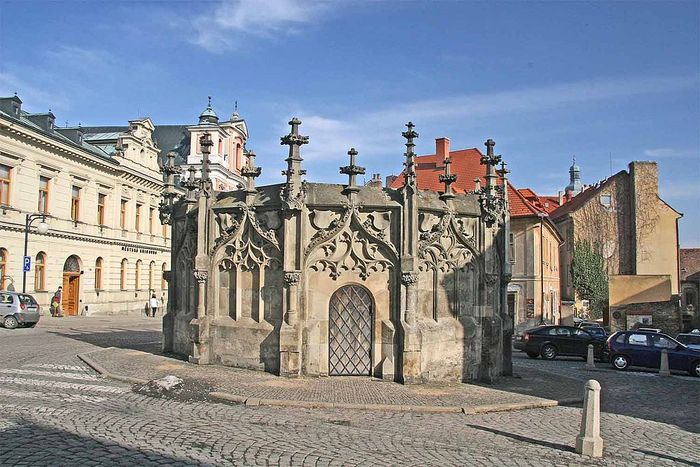 1
Stone Fountain
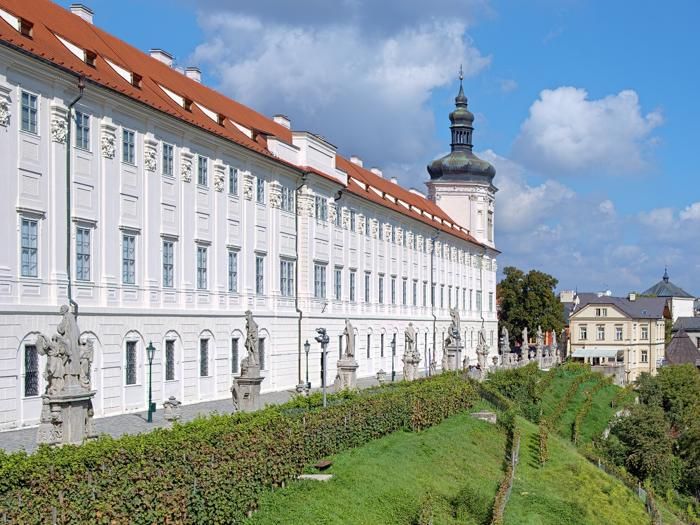 2
GASK (Former Jesuit College)
 3
View of St. Barbara's Cathedral
 4
The Church of St. Barbara
 5
Chapel of Corpus Christi
 6
Hrádek – Czech Silver Museum and Medieval Silver Mine
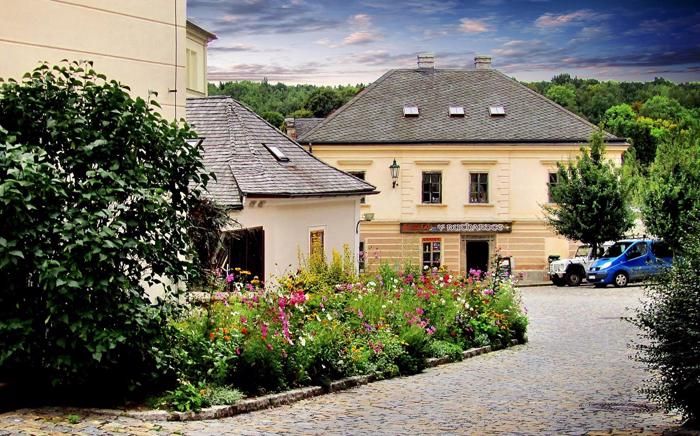 7
Restaurant V Ruthardce
 8
View of the cathedral and GASK
 9
Church of St. James
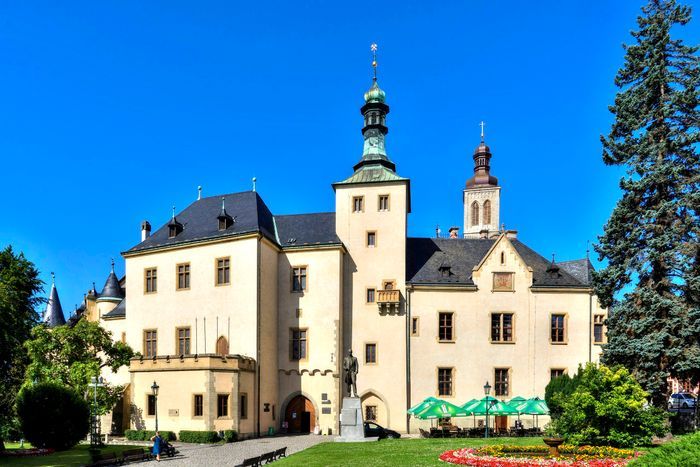 10
Vlašský Court
 Premium
The day trip to Kutna Hora

 1
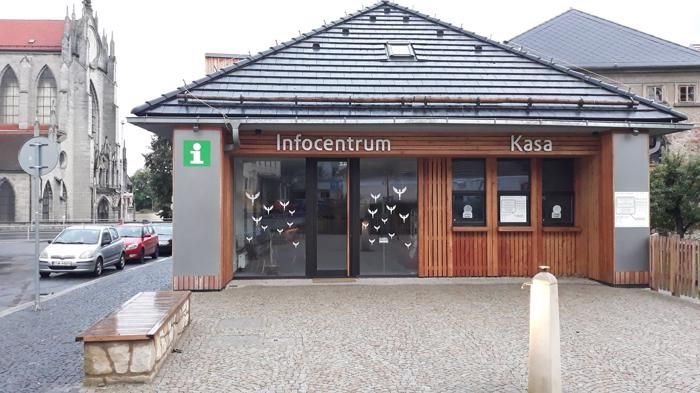
Information centre Kutná Hora - Sedlec
 2
Cathedral in Sedlec
 3
Ossuary in Sedlec
 Stone House
Stone Fountain
View of the Cathedral & GASK
Chapel of Corpus Christi
Cathedral of Saint Barbara
Hrádek - Czech Museum of Silver and Medieval Silver Mine
View of the cathedral and GASK
Top sights
see all
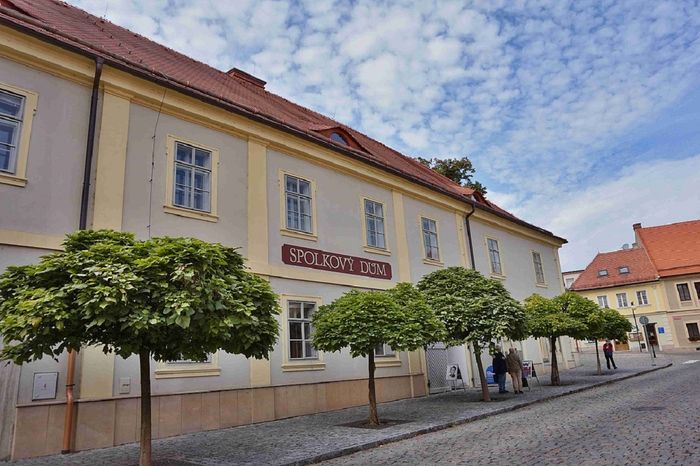
The historic core of this picturesque town with approximately 21,000 inhabitants has been a part of the UNESCO World Heritage List since 1995, along with the St. Barbara’s Church and the Church of the Assumption of Our Lady and Saint John the Baptist.
Silver Fever!
Owing to silver mining, which probably was being conducted on the surface of the area, it was one of the most important Czech royal cities in the Middle Ages. In the 1370s, a literal silver fever broke out here, and thousands of people moved to the settlement at that time, not only from near and far regions but even from German ones! At the end of the 13th century, one-third of European silver production came from here. In 1300, King Wenceslas II issued the law Ius regale montanorum, or the Royal Mining Law, which established royal rights over silver mining and minting. In the same year, he also introduced the single coin, the Prague groschen, and concentrated its minting in Kutná Hora. In 1318, Kutná Hora acquired the status of a town.
Kutat? Kutna? Kutta!
It will probably occur to everyone, quite logically, that the name of this city is derived from the fact that silver was mined, that is, rolled (kutat) here. Yes, this is one of the 3 interpretations of the name’s origin. The second frequently quoted version is based on the story of the Sedlec monk Antonín. They say that while resting in a field near the Sedlec Ossuary, three silver rods appeared in his dream, and in order not to forget the place where the rods were supposed to be, he marked it with his cowl (kutna) and ran to the monastery to tell his monks about his vision. However, the truth is much more prosaic... Most of the original population was German until the beginning of the 15th century, so the name comes from the Central German term Kutta, or pit, or hole, and Hora was then a common name for a place where mining took place.
Although the history of Kutná Hora would fill a long book (and there are several of them), in short, it was something like this.
The history of the town itself dates back to the 13th century, and its origins are linked to the tradition of silver mines in the area, which dates back to the 10th century. The wealth brought by mining enabled a vast building harvest, which for example gave rise to one of the most important medieval monuments - the Church of St. Barbara.
The decline came during the Hussite wars when the town was attacked several times and the population fought numerous national and religious quarrels. In 1424, Jan Žižka had the town thoroughly burnt down and the new inhabitants became the Tabor people. The town only began to rebuild under King George of Poděbrady and then with the support of Vladislav II. Jagellonsky, who was elected king here. At the end of the 15th century, the town was already rivaling Prague in importance, but the following century brought the end of the minting of the Prague groschen due to the import of cheap silver from Spanish-dominated South America, which led to a decline in mine yields and lower profitability of mining.
Kutná Hora played an important role in the Czech national revival. The archaeologist Jan Erazim Vocel or the playwright Josef Kajetán Tyl were born here, and Karel Havlíček Borovský lived and worked here. During the First Republic, Kutná Hora was a rather sleepy town, but it was still a town of sights and sightseers with a high cultural level. It was during this period that the parts of the town immediately adjacent to the historic core were undergoing construction activities that still define their character today. For example, the modern Dvořák's Monument to the Fallen in front of the Hrádek, the Kroh Houses, Machoň's District Office and Podzemný's tenement house were created. These buildings have shown that Kutná Hora can be further developed in a way that does not affect its historical parts and that modern buildings give the city a dignified framework.